


 Columns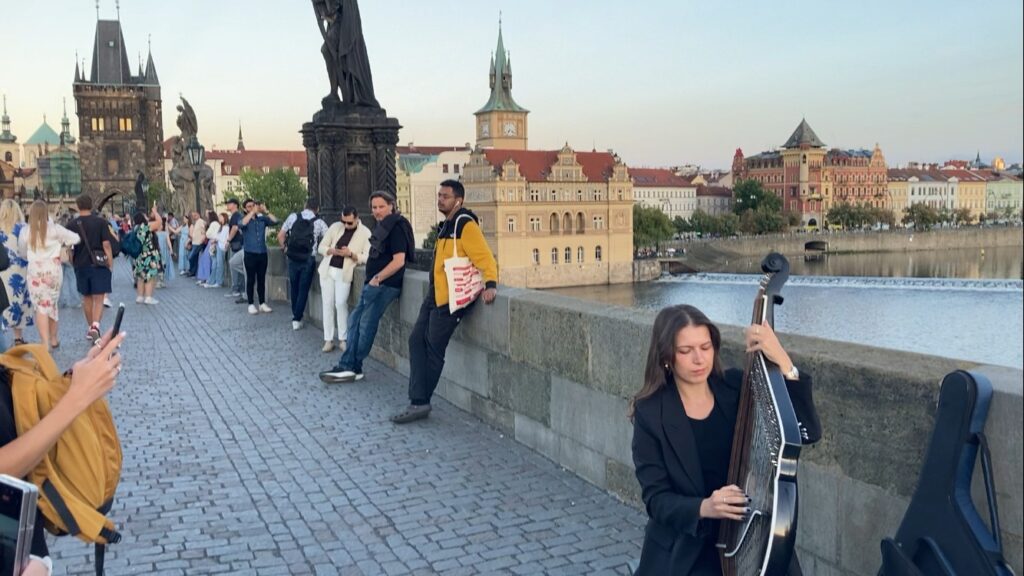
Originally published on Vilni Media
Recently, I traveled to Ukraine where I attended commemorations of Ukrainian Independence Day in Lviv and joined friends, colleagues and students at Taras Shevchenko National University of Kyiv for ceremonies celebrating the beginning of the new academic year and for a classroom discussion on U.S.-Ukraine relations. After being away for three and a half years, it’s uncanny how I could immediately jump right back into the rhythms of life in Ukraine, despite the ongoing war. I’m humbly hoping that my visit, a small gesture of solidarity with war-weary but resilient Ukrainians, helped boost their spirits. They certainly boosted mine with their courage and determination to keep on defending their freedom and democracy. It was hard to leave.
After my travels to Ukraine, I headed to Prague, a city that I had dreamed of visiting for decades. I can confirm that there is a good reason why the Czech capital is one of the top tourist destinations in Europe – it’s an astonishingly beautiful city! But what made the visit extra special for me was the strong presence of Ukrainians. Joining me for this part of my journey was my wife, Sonia.
On a walking tour of Prague, our guide mentioned that Ukrainians are the largest ethnic minority in Czechia due, of course, to the huge influx of refugees caused by Russia’s war against Ukraine.
According to data compiled by Statistics Netherlands (CBS), prior to Russian’s full-scale invasion of Ukraine there were about 190,000 Ukrainians residing in Czechia. Since the outbreak of the war in February 2022, Czechia has taken in approximately 400,000 Ukrainian refugees, which brings the total to nearly 600,000 Ukrainians currently living in Czechia. The estimated population of the Czech Republic is close to 11 million people.
Earlier this year the online publication expats.cz published a piece underscoring that Ukrainians make up about five percent of Czechia’s population and that Ukrainians constitute half of all foreigners living in the country. While recognizing the challenges of accepting such a huge influx of Ukrainian refugees the author of the story noted that “as war in Ukraine drags on, the Ukrainian community in Prague has flourished, with new businesses, cultural initiatives, and a growing sense of belonging.”
On the cobblestone streets of Prague, we certainly heard a lot of Ukrainian being spoken by passersby but several interactions with Ukrainians during our weeklong visit really helped confirm that Ukrainians have a robust presence in the city and country.
During a stroll on the magnificent Charles Bridge we came upon a bandura player from Bila Tserkva who mesmerized the crowd with her enchanting performance.
At a classic Czech restaurant, we had a lively discussion with our waitress, Olena from Dnipro, about the differences between Czech and Ukrainian potato pancakes and the unique characteristics of the national cuisines of both countries.
At the open-air Havel’s Market, where we bought treats and souvenirs, it turned out that the salesperson was a young Ukrainian mother from the Sumy region. She had evacuated from her home in a border area which has been suffering from ferocious Russian bombardment. Our conversation about the war, her family and American support for Ukraine brought her to tears and she gave us a long, strong embrace.
We had coffee with Hanna Tverdokhlib, a native of Transcarpathia and a former Voice of America journalist, who now resides in Prague. She jokingly said that her affinity for Prague might be related to the fact that her hometown of Uzhhorod was part of Czechoslovakia for a time.
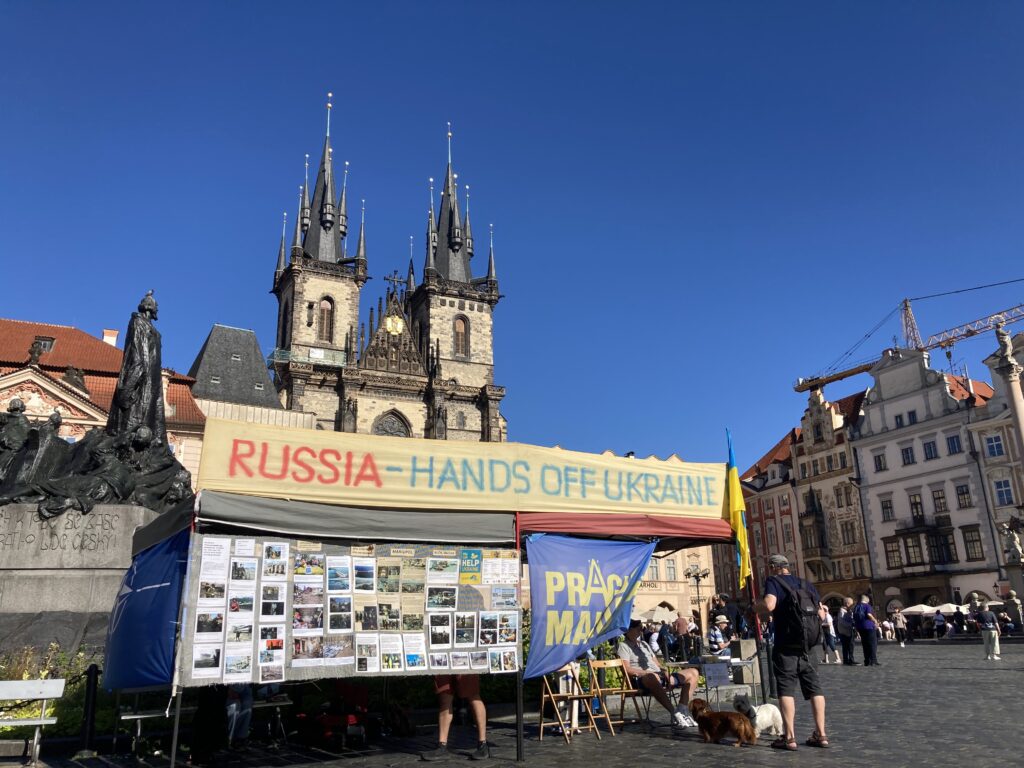
At the Old Town Square, we talked with activists of Prague Maidan (Ukrainians and Czechs) who had unfurled a huge banner reading “Russia, Hands Off Ukraine.” They were collecting donations in support of Ukraine and handing out pro-Ukraine literature and buttons.
And on a day trip to Karlovy Vary, a famous spa town outside of Prague, we met up with Svitlana, a Ukrainian teacher from Dnipro with whom my wife has been conducting conversational English sessions this year via the U.S.-based ENGin program. Svitlana taught us how to properly draw and sip water from the local hot springs.
We started our excursion to Karlovy Vary at the Prague bus depot where multiple ticket windows are designated for travel to Ukraine and where many passengers were speaking in Ukrainian, hugging and kissing arriving and departing loved ones – an indication that many displaced Ukrainians are traveling back and forth.
Walking around Prague for a few days we could not help but notice that on government buildings, alongside Czech and European Union flags, we typically saw the blue and yellow flag of Ukraine. This is emblematic of the Czech leadership’s substantial, unwavering support of Ukraine in the face of Russia’s invasion. To cite just one example, President Petr Pavel and Prime Minister Petr Fiala have led an initiative that has provided Ukraine with well over two million artillery shells thus far. The list of Czech military support for Ukraine is extensive.
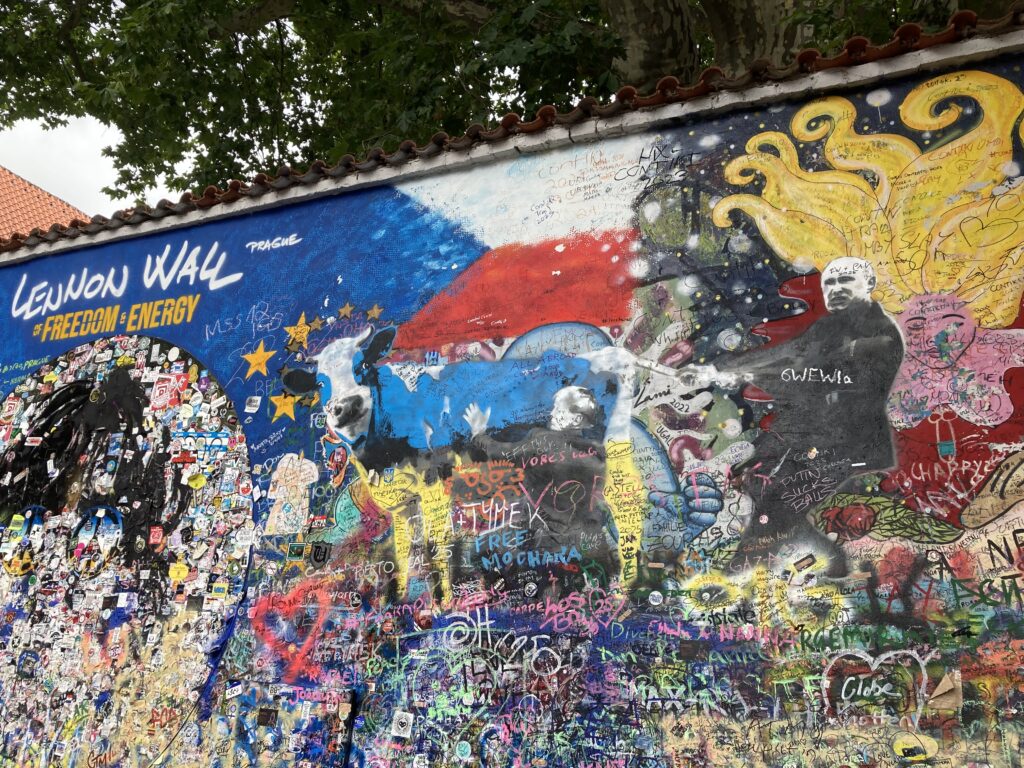
A manifestation of popular support for Ukraine was also visible on the famous graffiti-covered John Lennon Wall in Prague. Established as a site of homage after the famous Beatle’s murder in 1980, it morphed into an ever-evolving display of anti-authoritarian protest messages. Today it serves as a canvas for free expression and commentary on contemporary issues. There was a drawing that particularly caught our attention – an anonymous street artist had painted an image of President Trump milking a blue and yellow cow, apparently a reference to the at-first contentious and lopsided effort of the U.S. administration to coerce Ukraine into signing a minerals deal. I added my own message to the wall: Freedom and Peace and Justice for Ukraine!
In this article, I didn’t delve into the long history of the Ukrainian community of Prague, but I will close with one intriguing anecdote which has a special meaning for me as a former chief of the Voice of America’s Ukrainian Service. After the communist takeover of Ukraine more than a century ago, Nykyfor Hryhoriyiv, a minister of education of the Ukrainian National Republic, took refuge in Prague where he became a leader of the Ukrainian diaspora in Czechoslovakia in the 1920s and 1930s. Later he moved to the United States, eventually becoming the first director of the Ukrainian Service of the Voice of America. You can read about the life of Ukrainians in Prague in the 1920s and 1930s in an excellent biography of Hryhoriyiv written by Kyiv historian Olha Sukhobokova.
Links:
https://www.cbs.nl/en-gb/news/2025/19/4-7-million-refugees-from-ukraine-across-europe
https://www.expats.cz/czech-news/article/i-still-believe-most-czechs-support-us-ukrainians-in-prague-face-uncertainty-with-resilience
https://www.reuters.com/business/aerospace-defense/czech-arranged-ammunition-shipments-ukraine-are-increasing-says-government-2025-07-17/