


 Columns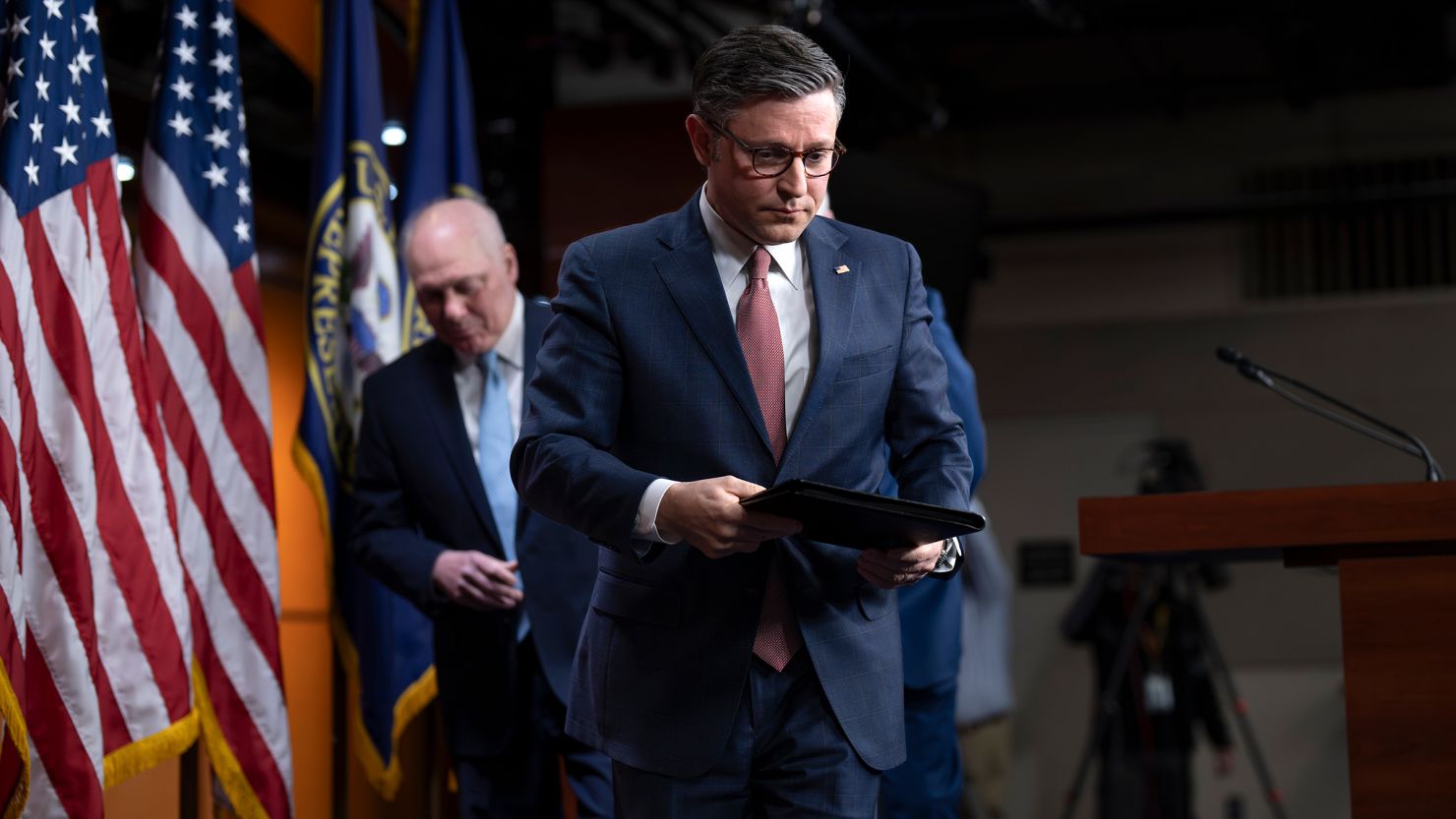
Originally published on The Ukrainian Weekly
As the House returns to Washington this week, its highest priority must be to pass a Ukraine spending package that would provide badly needed air defense, artillery and other essential military needs.
This long-overdue aid is essential to resupply air defenses to protect Ukrainian civilians and infrastructure against Russia’s relentless missile, drone and aerial attacks. It will replenish Ukraine’s military, including with weapons such as ATACMS, to fend off Russia’s anticipated coming offensive.
The United States has undeniably played a pivotal assistance role to date. Thankfully, Europe is stepping up but it’s not nearly enough to compensate for the prodigious capabilities of the “Arsenal of Democracy.”
The optimal solution would be for U.S. House Speaker Mike Johnson to bring to the floor for a vote the national security supplemental package that was passed by the Senate back in February by a resounding vote of 70-29. This $95 billion supplemental included $61 billion for Ukraine.
Assisting Ukraine should be a no-brainer. Numerous arguments by a myriad of people, including this columnist, have been put forward since last September making the case for this aid on national security, geopolitical, economic and moral grounds. The arguments against providing aid are weak and unpersuasive – at least to any rational person. Unfortunately, Russian disinformation efforts have had their negative impact on the more naïve or, perhaps, the more cynical.
That aid to Ukraine has been stalled for more than half a year is beyond exasperating, sad and stupid. It’s a damning example of the dysfunction in our political system, notably, in the House of Representatives. Ukraine aid, unfortunately, has been needlessly held hostage to domestic politics.
The irony is that a solid majority of House members would vote in favor of aid to Ukraine if such a vote is allowed. The chief obstacle has been the far-right House members who believe – or pretend to believe – in the gospel of America First isolationism.
The isolationist strain in American politics and in the Republican party specifically is an old phenomenon. It was only in the early 1950s, as the Soviet threat became more enduring, that the internationalist wing of the Republican party, led by President Dwight Eisenhower, became dominant. Indeed, a broad internationalist consensus in both political parties predominated in U.S. relations with the Soviet Union, and afterward with Russia as well as with the nations that emerged from the rubble of the Soviet empire. This solid bipartisan consensus favored an independent, democratic, Western-oriented Ukraine. Moscow apologists or anti-Ukraine members of Congress were outliers. During my 35 years on Capitol Hill dealing with these issues, I rarely saw expressions of isolationist sentiment when it came to Ukraine and the neighboring region. Sadly, the emergence of the new America-First, MAGA isolationists has tested the traditional bipartisan consensus.
Their muse is former President Donald Trump, who has been ambivalent at best and hostile at worst on assisting Ukraine in its existential fight against Russia’s unconscionable aggression. Mr. Trump has repeatedly displayed anti-Ukraine sentiments as well as a disconcerting affection for Hitler’s 21st-century heir Vladimir Putin.
Much now depends on the speaker of the House of Representatives, Mike Johnson. He has recently pledged to advance some form of Ukraine aid soon. He understands the national security and geopolitical import of the moment.
He also knows it’s morally the right thing to do. As a devout Christian, the speaker understands that Putin’s aggression is anathema to everything that Christianity stands for. Among other things, he has met with Evangelical leaders from Ukraine and is familiar with the plight of Christians in the Russian-occupied territories.
Mr. Johnson is under intense pressure to do the right thing. He has heard from Ukrainian officials, including President Volodymyr Zelenskyy directly, and from a slew of other European leaders. The speaker and most of his fellow Republicans in the House have heard from influential conservative groups such as Republicans for Ukraine and Ukraine Strong. Congress continues to hear from the Ukrainian-American community, and the Razom-affiliated American Coalition for Ukraine, which also encompasses many dedicated non-Ukrainian groups and individuals.
Crucially, both Democratic and Republican Senate leaders continue to press Mr. Johnson to act, as are House Democrats and many pro-Ukraine House Republicans. So, one might think this should be easy, but it’s not.
The speaker is in a politically unenviable position. The MAGA America Firsters in his caucus have threatened his job if he moves to help Ukraine. Notably, the notorious Marjorie Taylor Greene filed a “motion to vacate,” which could trigger a vote to remove him. The speaker is walking a political tightrope, although Democrats have signaled that they will provide the votes to protect his speakership in exchange for moving on aid to Ukraine.
Mr. Johnson is trying to find a way to pass the aid by exploring compromises to the Senate-passed legislation that could appease reluctant House Republicans. Various options include having part of the aid disbursed in the form of loans rather than grants and incorporating language from the REPO Act that could facilitate the process of transferring Russian state assets held in the U.S. to help Ukraine. While there are several pathways to passage, none of them are easy politically. One possible workaround is the discharge petition.
We all need to keep calling Mr. Johnson at 202-225-4000 to make our voices heard. Contact your Congressional office. Urge them to do everything in their power to get past the finish line on Ukraine aid.
If they have not already done so, ask them to sign Rep. Jim McGovern’s (D-Mass.) discharge petition that would compel a vote on the Senate-passed aid bill if it reaches 218 signatures. As of this writing, it has 191. The following link will let you see if your Congressperson is on it: https://clerk.house.gov/DischargePetition/2024031209?CongressNum=118.
Speaker Johnson and Congress need to find a way to pass Ukraine assistance – now! History is calling.
Orest Deychakiwsky may be reached at orestdeychak@gmail.com.