


 Columns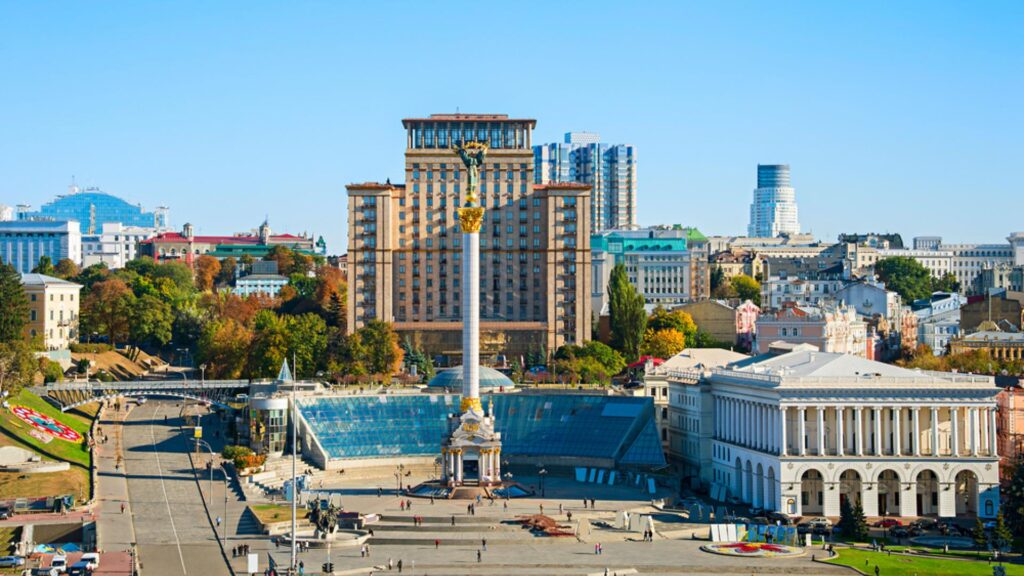
Originally published on The Ukrainian Weekly
I recently had the opportunity to spend nearly two weeks in Ukraine. It was my first visit since Russia’s full-scale invasion and the longest I had been away in my adult life. Until now, every one of my visits since 1990 had been related to my work at the Helsinki Commission or as an international election observer. It was a refreshing change to go to Ukraine as strictly a tourist, although I did meet with friends who are current or former Ukrainian government officials.
Without flights to Ukraine, getting there has become more challenging since February 2022. You have to take a car, bus or train. My traveling companion, Adrian Karmazyn, and I took the train from the ancient Polish capital of Krakow, a beautiful city worth visiting in its own right. (In the small world theme, it turns out that both Adrian’s and my maternal grandfathers attended Krakow’s Jagiellonian University law school in the 1930s – something we had not known about each other until this trip, despite knowing each other for most of our lives.)
From Krakow we took the train to the delightful small historic city of Przemysl (Peremyshl), which is close to the Ukrainian border. While Polish, it has also been an important Ukrainian religious, cultural and political center throughout history. In 2022, it was the major gateway for Ukrainian refugees fleeing the war. There is a sign on Peremyshl’s Ukrainian National Home (Narodniy Dim), which also houses the Ukrainian consulate, that stood out to me. It has the following words, in both Polish and Ukrainian: “There is no independent Ukraine without an independent Poland. There is no independent Poland without independent Ukraine.” These words have become even more relevant since Russia’s recent drone incursion into Poland.
Once in Ukraine, the signs of war are present, even though you’re far from the front lines.
Ukrainians honor the fallen defenders of their land. On the main road from Lviv to Ivano-Frankivsk to see the village my father grew up in and to visit relatives my driver pulled over and stopped the car. All the cars going in the other direction stopped as well. It was the daily 9 a.m. nationwide moment of silence to honor those who have died in the war. A few days later Adrian and I were on the train to Kyiv. At 9 a.m, virtually all the passengers stood up for the minute of silence. It was a powerful manifestation of remembrance and respect for the sacrifices made that I am told happens across the country every day. It is a national ritual.
On Ukrainian Independence Day, August 24, Adrian and I attended a panakhyda (liturgical memorial service) on a windy hilltop called Independence Hill overlooking Lviv in honor of the fallen. Afterward, we went to Lviv’s famed Lychakiv Cemetery, one of the oldest in Europe. At a new burial ground, there are rows and rows of graves, adorned with a sea of crosses, flowers and Ukrainian flags – and a sprinkling of other flags – of defenders of Ukraine killed in the current war. It was a deeply moving experience.
Since late spring, Ukrainians have faced frequent and massive Russian missile and drone attacks on civilian populations. We saw the scars of that. Ukrainians attack Russia’s military and energy infrastructure. Russians directly and deliberately attack Ukrainian civilians. There is no moral equivalence whatsoever.
Air raid warnings have become part of everyday life in most of Ukraine, especially in cities close to the front lines and in Kyiv. We experienced these mostly in Kyiv, less so in Lviv. During our four day and five-night visit to Kyiv in late August and early September, there were eight or nine air raid alerts. Our stay there happened to fall between the horrible August 28 attack in which 23 innocents perished, including four children, and the September 6 attack where the building of the Cabinet of Ministers was damaged.
Truth to tell, and perhaps unwisely, I did not often utilize the air raid shelters during alerts. In that, I was like most Ukrainians I saw, who with the passage of time have become less willing to go to shelters, especially if there appear to be no imminent threats. It is too disruptive of sleep, work and normal daily life.
I saw other reminders of the war, although far fewer than exist on the front lines: the severe damage done by repeated attacks on the large Burshtyn power plant not far from Ivano-Frankivsk, or the damage to buildings in Kyiv – blown out windows, collapsed facades and the destruction of sections of buildings. Many monuments in Kyiv, Lviv and around Ukraine are covered up to physically protect or camouflage them.
We visited Adrian’s friend at his home in a modern, attractive residential community south of Kyiv. It was similar, in many respects, to any nice development in North America, except for the fragments from Russian missiles and drones that had landed in the neighborhood on several occasions that our host displayed to us.
The term resilience to describe the Ukrainian people has become ubiquitous in the American media and elsewhere. But the term is spot on. Ukrainian strength, tenacity, determination, innovation, creativity and quiet courage is nothing short of awe-inspiring. Yes, people are exhausted by war and impacted by it, with varying degrees of stress, anxiety and trauma. Obviously, those living closer to the front lines and enduring more attacks are more affected. And yet, Ukrainians go on with their daily lives as best they can. They carry on. They play. They eat, sing and dance. They fight. They love. They adapt to changing fortunes and new circumstances.
And where possible, they enjoy life, despite it all. In Lviv, I had the good fortune to stay in an apartment right on the Rynok Square, the ancient, colorful and vibrant main square. I’ve been to a fair number of European cities in my time, but I don’t recall any with such a concentration of nice restaurants, cafes and coffee shops as in center city Lviv. And there were crowds of people frequenting them, as well as many people living their lives as normally as possible – taking strolls with their family and friends, shopping, visiting museums and theaters. This was also what I experienced during my time in Kyiv.
Some might wonder how people could possibly enjoy life in the middle of such suffering and death. But it’s OK – more than OK – for people to find moments of happiness, laughter and in their daily chores and routines. In fact, it’s psychologically healthy, helping to reduce trauma, reminding people that life is more than hardship and loss, and keeping hope and community alive.
Orest Deychakiwsky may be reached at orestdeychak@gmail.com