


 Columns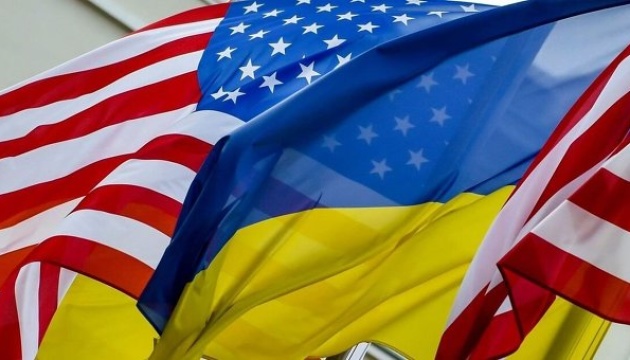
Originally published on The Ukrainian Weekly
Since last September, practically all of my columns have addressed the issue of aid for Ukraine. Little did I think that it would take eight long months for a U.S. supplemental aid package to come to fruition.
Approval of the $61 billion in aid for Ukraine was an excruciatingly long and painful ordeal. Multiple hurdles were eventually overcome in both the U.S. Senate and House of Representatives. The peculiar features of our Congressional system, coupled with Congressional dysfunction exacerbated by politics trumping policy as the November elections approach, allowed for less than one-half of one party largely in one chamber to thwart the will of a substantial majority of Congress. That effort will cost Ukraine as the country has lost military momentum, lost infrastructure, and, most tragically, lost lives.
In the end, as U.S. President Joe Biden said upon signing the aid package on April 24, America “rose to the moment.”
Military funding, doubtless the priority, makes up the largest portion of the aid package, and within hours of the signing vital military equipment was on the way to Ukraine. The new aid package includes economic and humanitarian support, and it comes as Congress also approved the REPO Act, which gives Mr. Biden the authority to seize billions of dollars in Russian sovereign assets to strengthen Ukraine. Both are crucial to Ukraine’s resilience and success and their importance should not be underestimated.
It is shocking, shameful and inexcusable that the only Ukrainian-born member of Congress, Rep. Victoria Spartz (R-Ind.), and Rep. Andy Harris (R-Md.), a co-chair of the House Ukraine Caucus whose Ukrainian mother came to America after World War II, joined “Moscow Marjorie” and other far-right Republicans in voting against the aid package.
It’s puzzling that some Ukrainian Americans would rhapsodize about having an ethnic Ukrainian member of Congress as if that would be a panacea. In my experience with Congress going back nearly 45 years, I’ve seen numerous Senators and House members of every political persuasion with no ties whatsoever to Ukraine supporting Ukraine’s freedom and independence. Indeed, many of them barely had any Ukrainian constituents.
Ms. Spartz and Mr. Harris are among the 112 “ignoble, infantile Republicans who voted to endanger civilization,” as George Will put it so pointedly in a recent Washington Post column.
In contrast, virtually all other members with roots in Ukraine voted “yes.” One is long-time Ukraine champion, House Ukraine Caucus Co-chair Rep. Marcy Kaptur (D-Ohio), whose Polish ancestors came from western Ukraine. Just about every Jewish member of Congress – many of whom trace at least some of their heritage to Ukraine – voted “yes.” In fact, I have found that a disproportionately large number of Ukraine’s most ardent backers in both the Senate and House going back decades have been Jewish.
For all the “ignobles,” we should not lose sight that nearly four-fifths of the Senate and three-fourths of the House voted for Ukraine aid. Those representatives understood that standing with Ukraine would be one of the most consequential, historic decisions they would make during their time in office.
Each of the dozens of Senators and Representatives who have visited Ukraine since 2022 has been especially outspoken. There is nothing like experiencing the situation on the ground to help appreciate the gravity of the moment.
Enough can’t be said about both Senate Majority Leader Chuck Schumer (D-N.Y.) and Minority Leader Mitch McConnell (R-Ky.), two political opponents who came together to vigorously promote the aid package. Both men have been staunch friends of Ukraine for decades. And, of course, there was House Speaker Mike Johnson’s evolution on Ukraine that led to success.
The chairs and ranking members of relevant House and Senate committees were also instrumental in achieving a favorable outcome.
Pro-Ukraine advocacy does not occur in a vacuum. Bipartisan Congressional support for Ukraine is nothing new. It did not start in 2022, or even 2014. It existed even before Ukraine’s independence. There has long been a reservoir of goodwill toward Ukraine in Congress.
I think back to my own Helsinki Commission experience with former House Majority Leader Steny Hoyer (D-Md.) who chaired the Helsinki Commission in the 1980s and often raised the issue of Soviet human rights abuses in Ukraine. He implored his colleagues to pass the supplemental, at one point lamenting on the House floor that, “We are sleeping as Ukraine is burning!” Other former Helsinki commissioners, among them Sens. Ben Cardin (D-Md.), who chairs the Senate Foreign Relations Committee, and Roger Wicker (R-MS) the top Republican on the Senate Armed Services Committee,, have strongly supported Ukraine for many years and have traveled there on multiple occasions. Former Helsinki commissioner and U.S. Rep. Michael Burgess (R-Texas) chaired the House Rules Committee hearing that cleared the path for the House Ukraine bill. Watching it on C-SPAN several days before the House vote, I thought back to when he and I traveled to Kaniv, Ukraine, as observers of the Organization for Security and Cooperation in Europe (OSCE) during the 2014 parliamentary elections. While there, I showed him Taras Shevchenko’s grave and even a new church that my wife’s uncle had financed.
The outside effort to encourage passage was remarkable. Thousands upon thousands of Americans, many with no connections to Ukraine, in hundreds of non-governmental organizations or individually, engaged members of Congress and staff. In meetings, letters and phone calls, they made their voices directly heard, including many of you reading these lines. We kept the faith and persisted even when the situation looked bleak. And the Ukrainian American community was out in force in a way I have not seen since the years leading up to Ukraine’s independence.
There is tremendous relief in the democratic world – nowhere more so than in Ukraine itself – that Congress made the monumental decision to continue to stand with Ukraine. But Ukraine supporters can’t get comfortable or rest on their laurels. Aid opponents are already claiming that this package will be the last. Be forewarned, the battle against the “ignoble and infantile” is far from over.
Orest Deychakiwsky may be reached at orestdeychak@gmail.com.